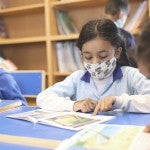
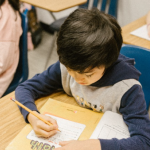
Schools are enrolling now for next year across Houston and the state of Texas, with officials in many districts still hoping to bring their headcounts back up to prepandemic levels, particularly prekindergarten, which has 25,000 fewer students than it did in 2019-20.
After two years of virtual events, the 2022 Kinder Institute Luncheon will once again be one of Houston’s most insightful gatherings of business and community leaders!
Before the pandemic hit in March 2020, Faith—a single mother with two children, one in third grade and one in fifth grade—worked at a sports stadium in Houston. Her focus at the time was “paying for a room and trying to pay for child care,” she stated during an interview. But after the pandemic began, the stadium canceled games and Faith found herself out of work. Not long afterward, she and her children were evicted.
Earlier this month, Communities In Schools of Houston, a non-profit organization that has served the Houston community for over four decades, received an unprecedented financial gift.
This report is the culmination of a multi-year study on student mobility undertaken by the Kinder Institute for Urban Research's Houston Education Research Consortium in collaboration with 10 public school districts in the Houston area.
Houston Education Research Consortium shares results from the Survey on Social and Emotional Skills. A panel discusses the study’s local and international implications.
A study of 10 public school districts in the Houston area found that the higher the school-year mobility rate at a school, the lower its accountability performance.
This brief relays findings on how campuses’ student body characteristics, neighborhood features, campus attributes, and nearby alternative schooling options influence campus mobility rates.
Tens of thousands of students in the Houston area switched schools during the school year annually. This study examined what this mobility meant for students’ performance on state accountability tests, high school grade retention, high school dropout, and high school graduation.
This two-part study seeks to understand the relationship between school suspensions and juvenile justice contact in the Houston Independent School District (HISD).
In this series of research briefs, HERC examines the between district mobility of students from the perspective of 10 public school districts in the Houston area.
This brief explores the informal networks of elementary school student mobility in the Greater Houston area across 27 independent school districts (ISDs).
Texas Senate Bill 15 is awaiting Gov. Greg Abbott’s signature. Originally intended to set in place policy to fully fund virtual schooling for districts around the state, the passage of this bill could have been a proud moment for Texans, a response to the immediate needs of school districts during the pandemic.