Racial inequities have long plagued the U.S. housing market. Yet only recently has the federal government moved to address one aspect of the real estate industry that continues to exacerbate the racial wealth gap in housing: appraisals.
Houston and Dallas-Fort Worth were again among the fastest-growing metropolitan areas in the country last year, according to new statistics released Thursday by the U.S. Census Bureau.
During the February freeze last year, stories of neighbor helping neighbor were easy to find. Residents with electricity offered up extension cords to charge phones, lent out gas generators to keep heaters going, delivered hot cocoa to keep their spirits up, or simply opened their homes for a few hours or a few days to provide shelter. But what if we didn’t wait until the next disaster to really know and help our neighbors?
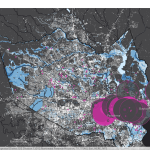
In 20 years, the population center of Harris County moved 2 miles, taking it from the heart of the historic Heights area and outside the Loop for the first time. It’s yet another sign of the suburban surge underway in the Houston area.
There is a lot to like about accessory dwelling units—garage apartments, in-law cottages, granny flats—as a form of housing. Done well, ADUs can help meet the needs for multigenerational families, workers and students, and they offer a gentler form of infill density in urban neighborhoods. They can also provide a source of income and build wealth for the homeowners who choose to build them. What will it take to spark a “backyard revolution” in Houston?
In November 1979, Houston City Council went from being almost exclusively male and white to being dramatically more diverse, literally overnight, as voters elected the council’s first two women and its first Mexican-American, and tripled the representation of African-Americans. The new council was also on average 10 years younger. It was a new day in city politics—thanks to federally required reforms that led to single-member districting—and Houston never looked back.
The Houston suburb of The Woodlands has been called an “invisible city” for the dense tree canopy that shrouds the extent of its development. It is invisible perhaps in another way: It’s not a city at all, but rather a patchwork of special districts, service contracts and interlocal agreements—a tenuous marvel of public-private partnership. But that could soon change.
Mobile homes are the largest source of unsubsidized affordable housing in the United States and many are within mobile home parks—unique communities that are poorly understood by planning researchers and many practitioners.
After over a month of incentive programs, outreach efforts, public pressure and mounting fears around the more virulent COVID-19 Delta variant, Harris County has tens of thousands more newly vaccinated people than it did over a month ago. But despite millions spent on incentive programs, uptake is slowing.
A flood on its own can be disastrous. But floodwaters combined with decades-old toxic waste sites and releases of potentially cancer-causing chemicals—that’s dangerous. Unfortunately, heightened flood risks are unevenly dispersed throughout Harris County.
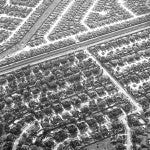
The popular perception is that Texas’s metropolitan areas are sprawling all over the place because the state has so much land. The truth of the matter is a little more complicated, however. Yes, all the metros in Texas are sprawling – but they’re densifying as well. And when you “net it out,” the density is winning over the sprawl in the big metros – while the sprawl is winning over the density in the smaller ones.
Texas added about 4 million new residents from 2010 to 2020, making it the third fastest-growing state. At the same time, it also became more diverse, and much like the rest of the country, its residents are increasingly concentrated in cities and suburbs.
After catastrophic floods—like those after Hurricane Harvey dumped several feet of rain on the Houston area four years ago—survivors generally have two options: rebuild, perhaps with the help of flood insurance or federal reimbursement programs, or relocate, perhaps by selling a damaged home or waiting for a government buyout program. A new study has found that the route people choose might have more to do with their pre-flood plans rather than the scale of the disaster itself. This has implications for how policies are designed to encourage resiliency and managed retreat.
The Federal Emergency Management Agency has become increasingly relied upon to help states and local jurisdictions recover and prepare for disasters, particularly hurricanes, floods, fires and more recently, pandemics. Proposed rule changes for the program could reduce future funding allocations, even as disasters seem to become more commonplace.