Regular physical activity may be the closest thing we have to a “magic bullet” to combat the obesity epidemic and alarmingly high rates of cardiovascular disease. Physical activity offers dramatic benefits for individuals but it also has the potential to knit together the social fabric of our communities, making us healthier physically and mentally. And it is free. So, what’s holding us back? As it turns out, something as easy as a safe walk around the neighborhood is out of reach for too many communities.
On May 11, 2021, Rice University’s Kinder Institute for Urban Research released the results of the 40th annual Houston Area Survey. Among the findings: 22% of respondents – a far higher share than in any previous survey – rated “public health” as the “biggest problem facing people in the Houston area today.”
The United States of America leads all high-income nations in COVID-19 deaths, even though as a nation it had the greatest access to antiviral vaccines and therapeutics. To understand this disconnect, we can look to the COVID-19 deaths and disability in the state of Texas. Because of COVID-19, Texas is enduring one of the greatest human tragedies in its 186-year history. It did not have to be this way.
Settegast’s estimated life expectancy of 65.7 years, more than 20 years lower than the highest expectancies in Clear Lake and River Oaks, makes it among the most vulnerable communities in our area. While residents of the historically Black neighborhood in northeast Houston have called out inequities over the course of several decades, those concerns have mostly gone unheeded. But there is hope that change is coming.
My wife and I couldn’t believe it. When we retired and moved back home to Houston’s historically Black Pleasantville, just east of downtown, we smelled the unmistakable odor of the petrochemical plants and saw the close-knit community where we’d grown up surrounded by noisy freeways. The apartments where friends of mine lived had been replaced by warehouses swarming with old diesel trucks.
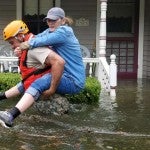
Natural disasters are increasingly common each year, affecting infrastructure and contributing to economic, social, health, and psychological hardships. When Hurricane Harvey hit Houston in 2017, it quickly amassed $125 billion in damages, displacing over a million people and their homes. Along with the economic toll of a disaster event, mental health concerns carry a cost that is difficult to measure.
When COVID-19 struck in early 2020, public health experts in Houston swung into action. But, unlike in other major Texas cities, two different agencies swung into action: the City of Houston Health Department and the Harris County Public Health Department. Although they worked well together in a crisis, the pandemic gave new currency to the question of how public services are delivered in the Houston area.
This report examines the possible service overlaps between the Harris County Department of Public Health and the City of Houston
Department of Health and Human Services. The report also identifies options to reduce overlaps and increase the efficiency and effectiveness of the public health delivery system.
It is now clear that the pandemic will not be behind us anytime soon. The pandemic variants and skepticism over the vaccine have made the potential for herd immunity (requiring a very high vaccination rate globally) difficult if not impossible to attain. This means that we are probably going to have to live with COVID for the foreseeable future and to adapt continuously to its impacts to our way of life.
After over a month of incentive programs, outreach efforts, public pressure and mounting fears around the more virulent COVID-19 Delta variant, Harris County has tens of thousands more newly vaccinated people than it did over a month ago. But despite millions spent on incentive programs, uptake is slowing.
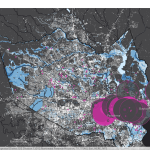
A flood on its own can be disastrous. But floodwaters combined with decades-old toxic waste sites and releases of potentially cancer-causing chemicals—that’s dangerous. Unfortunately, heightened flood risks are unevenly dispersed throughout Harris County.
The Texas Supreme Court’s decision to uphold Gov. Greg Abbott’s ban on local mask mandates means the state has officially told public schools to start the 2021-2022 school year as if the COVID-19 pandemic never happened. More correctly, as if it was still not happening. Others have already pointed to the health risks posed by not having a mask mandate in place at schools, and schools around the Houston area have already had to close because of outbreaks. But beyond the dangers posed to the health of students, staff, and families, the state’s approach is undermining schools’ ability to accelerate students’ learning and close gaps created and compounded over the past 18 months.
The Delta variant has led to COVID-19’s fourth wave—a surge in cases, hospitalizations and deaths. More than any other factor, what's driving this is the number of unvaccinated people—who either by choice or by design are not getting shots. Because vaccine hesitancy and access varies across states and cities, local solutions might be key to closing the gap.