Today's Mexican migrants in Houston are older, more educated and more likely to be married. As traditional family networks weaken, they are increasingly becoming long-term residents, reshaping the city's social and economic landscape.
A new Kinder Institute for Urban Research survey shows that 1 in 7 residents know someone who was detained and potentially deported, with the rate rising to more than 1 in 4 in some neighborhoods.
On immigration, a strong majority of Houstonians agree: Increase pathways to citizenship, stop mass deportation, let “Dreamers” stay, and finally fix a broken system.
Since its founding in 2016, Connect Community and its partners have put $126 million toward community development and holistic revitalization in the Gulfton and Sharpstown neighborhoods in southwest Houston.
In 2022, millions of Americans were on the move from one state to another. According to the U.S. Census Bureau, Texas was the top destination in the country.
In the past decade, immigrant populations fueled immense population growth in cities and suburbs in particular, according to a new report by the George W. Bush Institute. In the Houston metropolitan area, the report finds that immigrants are thriving best in Fort Bend County, ranked No. 8 in the country, and Brazoria County, ranked No. 15. Harris County was ranked No. 99.
The goal of this methodological study is to evaluate the efficacy of an innovative approach to create a proxy indicator of immigrant generation for school districts to use when data on immigrant generation or parent birthplace are unavailable.
The Kinder Institute’s “Re-Taking Stock” report reveals the good, the bad and the best about the city’s housing growth patterns. When it comes to urban infill, there is a lot going right in city, but that doesn’t mean everything is perfect.
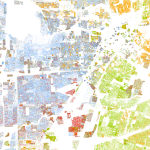
In the time since the Immigration and Nationality Act was signed in 1965, the demographics of Houston have changed dramatically. In 1980, the city was 55% white, 28% Black and 17% Hispanic. Today, the population is 25% white, 22% Black, around 7% Asian and nearly 45% Hispanic. Despite Houston’s high level of diversity, the city’s neighborhoods are segregated to a large degree.
In the past several months, the density of urban areas has been demonized by more than a few because of the COVID-19 crisis. While understandable, it’s not completely accurate when it comes to the current pandemic, which has ravaged New York but hasn’t affected other very dense cities like Hong Kong and Singapore in the same way. In Houston, the city’s light touch when it comes to land-use regulations and its relative affordability are leading to greater density. That trend is likely to continue when the pandemic ends.