

Webinar: 2022 State of Housing in Harris County and Houston
EVENT :
The Kinder Institute for Urban Research shares findings from the third State of Housing in Harris County and Houston report.
Webinar: 2022 State of Housing in Harris County and Houston
The Kinder Institute for Urban Research shares findings from the third State of Housing in Harris County and Houston report.

3 trends in urban planning that will shape how we live in the endemic-COVID era
It is now clear that the pandemic will not be behind us anytime soon. The pandemic variants and skepticism over the vaccine have made the potential for herd immunity (requiring a very high vaccination rate globally) difficult if not impossible to attain. This means that we are probably going to have to live with COVID for the foreseeable future and to adapt continuously to its impacts to our way of life.

If remote work survives the pandemic in Houston, it could curb congestion
What for some may be an anticipated return to “normal” is for others an anxiety-filled readjustment to pre-pandemic life. No matter which category you place yourself, there are some aspects of normalcy we’d all prefer to leave in 2019. Chief among them is the daily struggle to get where we need or want to go. Unfortunately, it’s not certain how long we have before traffic in Houston returns and exceeds levels we saw a couple of years ago.

Here at the Kinder Institute, we do a lot of research on housing—especially in Houston but also in some of the other big Texas metro areas. And all of our research says that Texas is gradually losing its affordability advantage: Home prices are rising faster than incomes, making housing less affordable each year. This is obviously true in Austin, where home prices are skyrocketing, but it’s also true in Houston and Dallas-Fort Worth as well.

Black neighborhoods have led the Houston area’s surge in start-ups during the pandemic
Economists studying the dramatic growth of new business activity found that the proportion of Black residents in a ZIP code had the greatest impact on the rate of increase and that business formation coincided with the stimulus payments.

The return to work will determine the fate of downtowns. Is Houston ready for what’s next?
Central Houston President Bob Eury has been tracking COVID-19 case counts since the early days of the pandemic and has the spreadsheet to prove it. It was a ritual that he says helped him stay on top of the virus and how far off “normal” might be. But there may be one number he is tracking even more closely: how many of downtown’s estimated 168,000 workers are returning to the office.
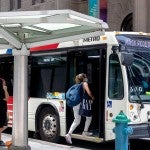
Pandemic POV: I got back on the bus this week — and it was fine
A longtime public transit rider describes what it was like to use Metro again for the first time in more than a year.

Coming out of the pandemic, how can cities counter 2020’s sharp rise in homicides?
Among 34 large cities studied, homicide rates increased almost 30% last year, compared to 2019. Reasons for the shocking spike relate in large part to the pandemic and its societal impacts, but the killing of George Floyd may have been a contributing factor as well. Evidence-based approaches and committed elected officials will be key to reducing violent crime in American cities going forward.

How to lessen the long-term educational — and economic — consequences of the pandemic
If action isn’t taken now to address and counter the disruptions in the education of students during the COVID-19 pandemic, the damage will be long-lasting and disproportionate. Here are some ways to deal with the impact.

It seems like all of California is moving to Texas. Is that true?
In the past, the influx of Californians to Texas has fluctuated from year to year. However, since 2018, the West Coast migration has remained high. Why is that? (Hint: It’s not oil prices.)

One year in, what progress has Houston made in its plan to build resilience?
In 2020, the City of Houston and regional stakeholders cemented a resilience strategy and a climate action plan, which were adapted to reflect COVID-19’s impact on urban life. The Kinder Institute has gathered information and updates on the progress made in the first year of these efforts in one place.

The US needs a bottom-up plan to fix its glaring infrastructure needs
A major, federally led infrastructure strategy is vital to meeting the nation’s challenges. A new Kinder Institute report shows that to be truly responsive to the needs of America’s cities and regions, a bottom-up consultation process with regional and local leaders and a focus on three priorities will be necessary.

We couldn’t help but notice that the suburb north of Dallas consistently ranks high on many of those “best cities for (fill in the blank)” lists we see so often. What is Plano’s secret?
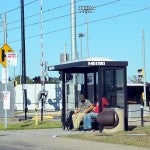
To improve transit equity in Houston, improve local bus service in these 3 high-demand areas
According to LINK Houston’s “Equity in Transit: 2020” report, roughly 867,000 Houston residents live in areas warranting more affordable transportation options for people who walk, bike and ride public transit. Transit plays a central role in connecting people to jobs, education, health care and many other opportunities.

Want transportation equity? Be an accomplice, not an ally
Tamika L. Butler loves biking, transit and transportation, and she advocates for all three because she cares about her family and wants to build a better world for them. That’s why, when talking about transportation, planning and the built environment — especially now, when transit agencies are considering drastic cuts because of the pandemic — she always talks about race.
Rice University
Kraft Hall
6100 Main Street, Suite 305
Houston, TX 77005-1892