Water connects us, yet too often our region’s ongoing relationship with water presents itself as flooding that wreaks havoc and devastates all in its path. In the aftermath of Hurricane Harvey, many efforts have emerged to try to rebuild our relationship with water from one of harm to one of resilience.
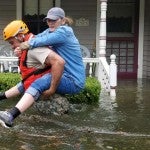
Natural disasters are increasingly common each year, affecting infrastructure and contributing to economic, social, health, and psychological hardships. When Hurricane Harvey hit Houston in 2017, it quickly amassed $125 billion in damages, displacing over a million people and their homes. Along with the economic toll of a disaster event, mental health concerns carry a cost that is difficult to measure.
When it hit five years ago this week, Hurricane Harvey was an unprecedented disaster: 68 people dead, 200,000 homes damaged or destroyed, a half-million cars wiped out, $125 billion in damage.
As a method of community planning, and as an impetus for creative placemaking (and placekeeping), poetry can help anyone–not just writers–think about how they are situated within their local communities and urban spaces. By writing poetry, any member of the public—in particular, those who are historically underrepresented—can turn conceptions into things that can be discussed and implemented. Since poetry has dislodged itself from patrician control and has found fertile ground in the digital landscape, it can be easily shared within local contexts and beyond.
In the summer of 2010, my husband and I drove over 1,000 miles to move to Houston with our 1-year-old and 3-year-old.
Not more than 20 minutes into our journey, our 3-year-old began asking, “Are we there yet?”
As the name of my new book of essays suggests, I have always believed that place and prosperity are deeply intertwined. A city or town probably won’t be prosperous unless it has lots of place amenities – things that draw people to the location like parks, good schools, restaurants and stores, cultural institutions, walkable neighborhoods. And a city or town probably can’t afford all those amenities unless it is prosperous.
The Rio Grande Valley (RGV), or el Valle del Rio Bravo as it is known in Mexico, is often considered a far-flung collection of small-town border communities. As such, it remains largely unknown to the rest of the U.S., except when cited as one of the poorest areas in the country alongside Middle Appalachia or the Lower Mississippi Delta.
About every quarter, the Urban Edge takes a break from its usual in-depth research-focused topics to assess the latest rankings of cities and states—some silly, some serious—and what they might tell us about Houston and Texas and their standing in the world of urban life. Today, we have to start with the bad news, where Texas is literally the worst.
Uber saw its ridership decline sharply amid the pandemic, but it was saved by an expansion of its delivery service. Its future, however, is tied to growing its ride-hailing service as it confronts reduced transit use overall and as it charts a path to electrifying its fleet by 2030. Uber’s global head of cities and transportation policy, Shin-pei Tsay, said the company is focused on pragmatic wins that it can scale across thousands of cities rather than wait on a transportation utopia to arrive.
Conversation about land use and building in cities often turns to questions of aesthetics or personal preferences. You find impassioned advocates of various kinds of architecture or lifestyle.
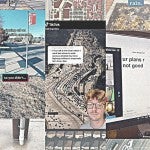
A small but active community of people is bringing the conversation about cities, urban design, transportation, and equity to TikTok. These would-be influencers have captured impressive audiences—hundreds of thousands of followers and millions of views, engagements and comments. They could be key to boosting awareness of urban problems and provoking dialogue and change—if only there weren't a million other videos begging for attention at the same time.
Before the pandemic hit in March 2020, Faith—a single mother with two children, one in third grade and one in fifth grade—worked at a sports stadium in Houston. Her focus at the time was “paying for a room and trying to pay for child care,” she stated during an interview. But after the pandemic began, the stadium canceled games and Faith found herself out of work. Not long afterward, she and her children were evicted.
I just took a trip to Switzerland and southern Germany, and was amazed by what I saw and experienced. As a country goes, Switzerland is relatively old, landlocked, and small. However, despite its reputation for being just about chocolate and skiing, it’s also quite diverse, both socially and economically. Its terrain is wildly varied, combining mountains, valleys, plains and lakes, with historically strong and distinct areas clearly defined in each area. And Switzerland consistently ranks near the highest in terms of overall quality of life.