From parks to police to garbage pickup, our surveys have tapped into a surprising level of support for raising revenues to help the city of Houston improve services and raise the quality of life across the city. What should we make of that? Are Houstonians really willing to pay more for better local government?
During the height of the COVID-19 pandemic, urban parks and greenspace provided welcome respite and recreation when people had to spend a lot of time indoors. That renewed appreciation for parks confirmed what many researchers have been pointing out for decades: They provide cities huge benefits for public health, the environment and the economy.
In October 2010, city officials were poised to strengthen Houston’s historic preservation law by adding a provision that, for the first time, would empower the city to forbid the demolition of certain homes in designated historic districts. Preservationists, who referred to the concept as “no means no,” were elated. But during last-minute wrangling over details, a Heights resident named Calvin Simper urged the City Council to reject the whole idea.
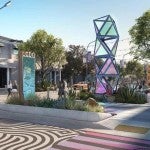
A Houston-based real estate acquisition, development and management company is in the beginning phases of reshaping parts of the East End and Second Ward into a more walkable and equitable place that adds to the neighborhood’s diversity.
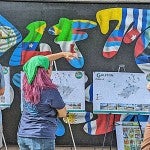
In August of 2020, a heat mapping campaign identified Gulfton as the hottest neighborhood in Houston. The effort, co-led by The Nature Conservancy and the Houston Advanced Research Center, indicated that the southwest Houston neighborhood was 17 degrees warmer than the coolest neighborhood measured. A community-driven plan, “Greener Gulfton,” seeks to decrease the sweltering temperature, while adding an array of benefits to the immigrant-rich area that 45,000 residents call home.
The Ten Across Summit will convene a premier group of leaders and experts to discuss important issues such as water, energy, infrastructure, equity, democracy and risk.
A new book, “Arbitrary Lines,” argues that a century of zoning has hardened racial and class segregation in cities across the U.S. and worsened the effects of inequality by making it almost impossible to build anything but single-family homes in some cities. Author and planner M. Nolan Gray says there is a better way: Just look at Houston.
The Rio Grande Valley (RGV), or el Valle del Rio Bravo as it is known in Mexico, is often considered a far-flung collection of small-town border communities. As such, it remains largely unknown to the rest of the U.S., except when cited as one of the poorest areas in the country alongside Middle Appalachia or the Lower Mississippi Delta.
Conversation about land use and building in cities often turns to questions of aesthetics or personal preferences. You find impassioned advocates of various kinds of architecture or lifestyle.
In 20 years, the population center of Harris County moved 2 miles, taking it from the heart of the historic Heights area and outside the Loop for the first time. It’s yet another sign of the suburban surge underway in the Houston area.
I just took a trip to Switzerland and southern Germany, and was amazed by what I saw and experienced. As a country goes, Switzerland is relatively old, landlocked, and small. However, despite its reputation for being just about chocolate and skiing, it’s also quite diverse, both socially and economically. Its terrain is wildly varied, combining mountains, valleys, plains and lakes, with historically strong and distinct areas clearly defined in each area. And Switzerland consistently ranks near the highest in terms of overall quality of life.
Many houses of worship own empty and underused buildings and land. Cities and counties need properties for affordable housing. Seems like a match made in, well, heaven.
It is now clear that the pandemic will not be behind us anytime soon. The pandemic variants and skepticism over the vaccine have made the potential for herd immunity (requiring a very high vaccination rate globally) difficult if not impossible to attain. This means that we are probably going to have to live with COVID for the foreseeable future and to adapt continuously to its impacts to our way of life.
The Houston suburb of The Woodlands has been called an “invisible city” for the dense tree canopy that shrouds the extent of its development. It is invisible perhaps in another way: It’s not a city at all, but rather a patchwork of special districts, service contracts and interlocal agreements—a tenuous marvel of public-private partnership. But that could soon change.
The popular perception is that Texas’s metropolitan areas are sprawling all over the place because the state has so much land. The truth of the matter is a little more complicated, however. Yes, all the metros in Texas are sprawling – but they’re densifying as well. And when you “net it out,” the density is winning over the sprawl in the big metros – while the sprawl is winning over the density in the smaller ones.