According to the United Way of Greater Houston, more than 1 million households in the Greater Houston area are considered asset-limited, income-constrained and employed (ALICE) or are below the federal poverty level. These households — as many as 8 in 10 in some neighborhoods — are unable to afford basic necessities.
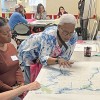
In partnership with 16 nonprofit partner organizations, the 27 fellows in the 2022-2023 Community Bridges cohort grappled with urban inequality and poverty issues within Greater Houston communities.
Houston is a city for cars today, but that doesn’t mean it has to be one in the future. In a new book, “Inclusive Transportation: A Manifesto for Repairing Divided Communities”, Veronica O. Davis makes the case that reorienting communities toward people rather than automobiles is in the hands of everyday people as well as policymakers.
In honor of the 30th anniversary of Project Row Houses' debut, the Urban Edge asked author and artist Lindsay Gary to reflect on the impact of this project on Third Ward, on Houston and on her own journey.
As economic aftershocks from the COVID-19 pandemic linger, Houstonians have a dimmer view of their prospects, according to the 42nd annual Kinder Houston Area Survey. With inflation and housing costs reaching record highs—and a potential recession on the horizon—optimism among survey respondents was at one of its lowest levels in nearly three decades. More than ever before, Houston residents are also in alignment that more must be done to close income gaps.
New homelessness data for the area was released by the Coalition for the Homeless of Houston/Harris County this week, with the 2023 mark showing little change from last year, but an increase in shelter capacity is keeping more people in safer conditions. Houston, considered a national model in reducing homelessness over the past decade, now looks to put a stop to chronic homelessness.
James Leveston has been fighting for more than 20 years to bring basic public services to the Montgomery County community of Tamina, where he’s lived for most of his life. Late last year, he went door to door asking his neighbors if they would support a deal with the nearby city of Shenandoah to provide water and sewer service. About 150 of the 190 affected households agreed, he said.
The government just released millions of records on residential appraisals. A pair of researchers who focus on racial inequity in housing analyzed the data. Here’s what they found.
Settegast’s estimated life expectancy of 65.7 years, more than 20 years lower than the highest expectancies in Clear Lake and River Oaks, makes it among the most vulnerable communities in our area. While residents of the historically Black neighborhood in northeast Houston have called out inequities over the course of several decades, those concerns have mostly gone unheeded. But there is hope that change is coming.
It’s really quite a lovely park, with features that check all the standard boxes: a playground, a gazebo with a big table, a soccer field, restrooms and water fountains, a paved trail that winds through the property, and lots of plain old green space. On a recent weekday afternoon, though, a visit to Tony Marron Park on Houston’s East End revealed a few glitches.
My wife and I couldn’t believe it. When we retired and moved back home to Houston’s historically Black Pleasantville, just east of downtown, we smelled the unmistakable odor of the petrochemical plants and saw the close-knit community where we’d grown up surrounded by noisy freeways. The apartments where friends of mine lived had been replaced by warehouses swarming with old diesel trucks.
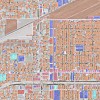
A new book, “Arbitrary Lines,” argues that a century of zoning has hardened racial and class segregation in cities across the U.S. and worsened the effects of inequality by making it almost impossible to build anything but single-family homes in some cities. Author and planner M. Nolan Gray says there is a better way: Just look at Houston.
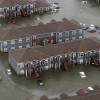
In the wake of two historically devastating storms in 2017, financial aid from the Federal Emergency Management Agency and the U.S. Department of Housing and Urban Development contributed to an increase in wealth inequality.
Friendswood, a close-knit suburb southeast of Houston that routinely makes lists for being the “best place to raise a family,” also serves as a case study for how flaws in the federal approach to flood insurance and disaster recovery aid resulted in fractured outcomes even among similarly situated middle-class neighbors after Hurricane Harvey.
This comprehensive study of educational equity throughout Houston ISD focuses on understanding whether historically marginalized student populations in the district have the resources they need to be successful in the classroom and beyond.