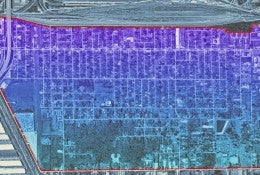
In the past month, new and greater focus has been placed on the need to address economic, environmental, educational and health care inequalities related to race in the U.S. For many years, systemic racism has limited access to housing as well. Here, we take a look at findings from the Kinder Institute’s State of Housing report in the context of Settegast, a historically Black neighborhood in northeast Houston.
Dozens of key housing indicators in Houston and Harris County shifted between 2010 and 2018, and in just the past several months the area has been hit by parallel economic and public health crises that have slowed home sales, disrupted the rental market and halted new development, making it even more difficult for many area residents to find affordable housing.
The efforts of demonstrators calling for racial justice for Black Americans has evolved into a global movement to address the economic, environmental, educational and health care disparities created by systemic racism in the United States. A new report compares and ranks the economies of all 50 states in terms of racial equality.
Highways that divide neighborhoods, crumbling local streets, poorly maintained public spaces and proximity to unhealthy industrial sites — impact black and brown communities far more than wealthier, predominately white neighborhoods. These inherent inequalities in the nation’s infrastructure systems are problems that arise from decades of racial inequality and disinvestment.
Large cities of the Sun Belt are getting bigger and younger faster than metro areas in other parts of the country. They also face a combination of challenges unlike those metros in other regions; however, American urban policy as we know it was created for traditional Northeastern and Midwestern cities.