This is the second in a series of briefs examining student access to Houston ISD pre-kindergarten programs. The study finds that among 2018-19 kindergarteners in HISD who did not attend HISD pre-k, about two-thirds of students likely qualified for enrollment.
This brief describes findings from interviews with high-performing high school sophomores from low-socioeconomic backgrounds who applied and were accepted into EMERGE during spring 2018, before any exposure to EMERGE programming. The goal of this study was to understand how students develop college aspirations and search for postsecondary institutions.
This study attempts to identify the spatial distribution of HISD pre-kindergarten (pre-k) programs across the district and better understand how program location may be associated with access and equity issues.
This study analyzes the distribution of college prep course offerings across Texas high schools and which school characteristics are associated with higher and lower numbers of college prep course offerings
This study provides an assessment of the effectiveness of Houston ISD 2016 summer school, which the district offered both to retained students (which was required and needed for promotion) as well as promoted students (which was not required but available for summer enrichment).
This Houston Education Research Consortium report assesses college advising needs in Pasadena, Galena Park, Sheldon, Humble, Aldine, Cypress-Fairbanks, Spring Branch, Alief and Katy ISD.
Researchers found arts-learning experiences benefit students in terms of reductions in disciplinary infractions, increases in compassion for others and improvements in writing achievement.
Houston Education Research Consortium (HERC) used the Houston Community Data Connections platform to track hundreds of thousands of Houston-area students' educational and professional careers for 17 years.
Hurricane Harvey rendered some 24,000 students in Houston Independent School District to be listed as homeless. The storm brought the district's overall total to more than 29,000 homeless students in the subsequent year, according to new research from the Kinder Institute for Urban Research’s Houston Education Research Consortium.
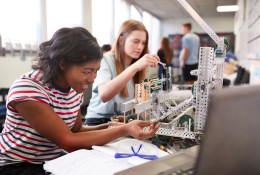
In the labor force and in postsecondary education, women lag behind their male counterparts when it comes to careers and interest in science, technology, engineering and math (STEM).
With a broad mission of supporting research to improve the lives of young people, William T. Grant Foundation President Adam Gamoran understands his organization has a distinctive niche.
School districts throughout the Houston area offer students a plethora of career and technical education (CTE) programs, but a lack of alignment between such initiatives and the living-wage job market can significantly impact career trajectories and future earnings.