The safety rankings were determined by comparing states’ level of coronavirus support, rate of unemployment, uninsured rate and financial costs of climate disasters per capita, among other criteria.
Houston lost $25 million in sales tax revenue in March alone because of COVID-19. But the city’s fiscal struggles existed before the coronavirus pandemic.
A new Kinder Institute report compares the revenue sources and service levels among the three largest cities in Texas — Houston, Dallas and San Antonio — all of which are expected to see COVID-19-related revenue losses of between 10 and 15%. Of the three, Houston is the most constrained in its options for increasing revenue.
The COVID-19 crisis forced many companies to quickly transition to work from home. Now, as the economy continues to open up, businesses have to decide if they’ll go back to the onsite world of the old normal or continue with the remote-work model of the new normal. Employees of companies that choose the latter will have more options for where they live and office, including the Urban Hotel, the Suburban Workshop and the Exurban Metropolis.
As the city faces an economic crisis brought by the coronavirus pandemic and the downturn in oil, it needs to recognize the enormous opportunity to make changes that are necessary to become a leading 21st-century city.
Stay-at-home orders to slow the spread of COVID-19 resulted in Houstonians driving a lot less. But Houston hasn’t stopped being an industrial city during the pandemic, which shows why reducing all air pollution is key to protecting public health.
Over the years, more and more of our public space has been given over to cars and congestion while pedestrians, cyclists and others have been squeezed out. One possible silver lining to the COVID-19 pandemic is the chance to give some of that space back.
More than 40% of Houston-area households have lost income as a result of the COVID-19 crisis. And the pandemic appears to be taking a greater economic toll on African American and Hispanic households than white and Asian American households, according to the latest survey results from Rice University’s COVID-19 Registry.
As the COVID-19 crisis continues, planners and urbanists should be considering the lessons we’re already learning during the pandemic and think about solutions that will improve our future cities. Those include things like urban farming, neighborhoods that are less drivable and more walkable, and better, safer shared-use of city streets.
In many African cities, the combination of density, widespread financial insecurity and underdeveloped health care systems make them especially vulnerable to being hit hard by COVID-19.
During this time of heightened stress and anxiety, stay-at-home orders and social distancing, the respite provided by simple things like a walk or run in the park has proved to be more important than ever. Let’s not forget that when we reach the other side of this.
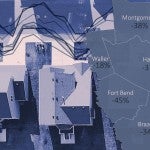
Researchers studying the impact of stay-at-home mandates on the area’s environment and infrastructure share insight into which county populations are limiting their movement — and potential exposure to the coronavirus — more than others.
Despite the current coronavirus-driven economic slowdown and drop in oil prices, Houston continues to be one of the fastest-growing and most prosperous metropolitan areas in America. The metro area continues to add about 100,000 residents annually and has a gross domestic product of a half-trillion dollars per year.
No, COVID-19 will not be the end of cities. But it will take time, effort and preparation to safely return them to “normal” as soon as possible, says urban studies theorist Richard Florida.
Many families in the Houston region live in homes with flood damage, of which they may or may not be aware. These residents may face high levels of mold exposure that can lead to lung damage that puts them at a greater risk of severe complications should they become infected with the novel coronavirus.