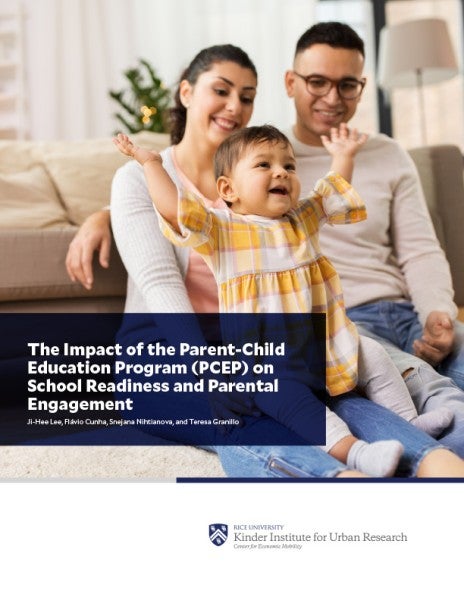
Active parental involvement boosts early childhood development and school preparedness.
AVANCE’s Parent-Child Education Program (PCEP) is a nine-month, two-generation intervention for low-income, predominantly Latino families with children ages 0 to 4. It pairs parent education — delivered through classes, toy-making workshops, community resource navigation and personalized home visits — with skill-building activities for children. This study evaluates how the PCEP approach impacts parental participation and early childhood development.
Key findings
- Parents/caregivers showed exceptional growth in their parenting skills, reporting that they felt more informed, confident and engaged in their children’s learning.
- Children showed significant developmental growth across language, cognitive and motor skills, establishing a stronger foundation for school readiness and long-term success.
- These gains proved durable across both generations, with child development and parent well-being continuing to improve months after the program ended.