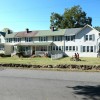
Influenced by the Garden City movement, Badin, North Carolina, is a small gem of urban planning whose design called for green space, residential areas and commercial development in proportionate amounts. The planning of small towns like Badin can serve as an example for larger cities as they continue to grow.
After a car-centric urban renewal plan irrevocably changed the town where he grew up, a young urbanist found the essence of Auburn, New York, in Southern California.
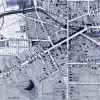
A failed plan to breathe life back into the economy of the beautiful, walkable city where I grew up left it half the place it once was, broke my father’s heart and shaped me as an urbanist.
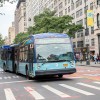
The Miracle on 14th Street demonstrates how taking a tiny fraction of road space from car traffic and giving it to bus travel is inherently equitable. And charging a very high price to cars for using scarce road space promotes equity and safety.
The image of the suburbs as being home to only white and wealthy residents whose ‘suburban lifestyle dream’ is being threatened doesn’t square with the reality of American life in 2020. Half of Black Americans live in the suburbs, which are much more diverse — both racially and economically — than many urban areas.
Roland B. Smith Jr. is from Washington, D.C., whose residents weren’t allowed to vote in a presidential election until 1964. Growing up, his mother would travel almost 500 miles by bus or train from D.C. to Asheville, North Carolina, where she grew up, just to vote. Roland B. Smith Jr. always votes.
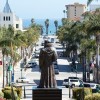
In the past four-plus months, many cities have been confronted with renewed outcries to remove offensive or ‘problem’ monuments that commemorate values of a bygone era. In some cases, these statues have been forcibly removed. In the latest essay in his ongoing series of stories about cities and why they are great, Bill Fulton revisits how Ventura, California, handled the controversy surrounding a statue of Father Junipero Serra.
Great public spaces are equitable places that bring people who are not the same together. Cities need to think bigger when it comes to funding parks, trails, libraries and other civic assets because the return on investment can be huge.
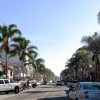
Main Street in Ventura, California, which has been closed to cars and opened to restaurants and other businesses affected by the coronavirus, is my favorite street. This essay is both a discussion of what makes a great street and a personal reminiscence about what this particular street means to me.
A rebate program for e-bikes would make them more affordable for residents who can’t afford an electric car and give others greater incentive to choose a mode of transportation that isn’t powered by fossil fuel.
There has been a lot of discussion and speculation about the future of cities and how they will change following the pandemic. What will that future look like for Black Americans, who have been abused, exploited, ground down and lied to in the past? As we move into the future, what will change? And what will stay the same?
From 1980 to 2015, homes in white neighborhoods increased in value, on average, $194,000 more than in neighborhoods of color, according to new research. And the rate of the gap in assessed values of these comparable homes in comparable neighborhoods is getting larger over time.
Our public transportation systems were built on a foundation of racism, and the only way to truly fix them may be to raze them and rebuild from the ground up.
Janis Scott cares deeply about transit equity. Known in the community as the “Bus Lady,” Scott has been riding METRO all of her life and considers public transit her lifeline to the world.
A new study shows that while fine particle air pollution has declined nationwide over the past 40 years, the health and environmental benefits haven't been shared evenly.