

Texas Flood Registry 2020 Report
RESEARCH :
This report includes updates on Harvey’s long-term impact and recent findings about the health and housing effects of the May 2019 storms and Tropical Storm Imelda.
Texas Flood Registry 2020 Report
This report includes updates on Harvey’s long-term impact and recent findings about the health and housing effects of the May 2019 storms and Tropical Storm Imelda.

Libraries are crucial to disaster recovery, but the coronavirus is keeping them closed
In many places, the public library often functions as a community center — a free and shared space that provides crucial social infrastructure for neighborhoods. That’s especially true when a disaster such as Hurricane Harvey hits. But what happens when a crisis like COVID-19 keeps libraries closed for five months and counting.

It’s hard to breathe with a concrete plant in your backyard
NIMBY opposition alone isn’t enough to counter the harmful effects of air pollutants emitted by concrete batch plants located in underserved and over-polluted communities in Harris County, which is home to more of these facilities than any county in Texas. Too often, much of the pollution and many of the polluters largely go unchecked by the state.

Houston lost 42,500 creative industry jobs and $1.6 billion in sales in 4 months
A new report measuring the damage done to America’s creative economy by COVID-19 shows the South, Texas and Houston are among the most devastated. At the metropolitan level, the Houston area is the largest metro suffering the worst losses.
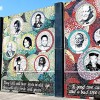
A summer fellowship is the bridge to AmeriCorps service in Fifth Ward
The Kinder Institute’s Community Bridges program provides Rice University students an opportunity to both study and work to address urban inequality in Houston. Here’s Susanna Yau’s story of how working with the Fifth Ward Community Redevelopment Corporation changed her life.

Nearly one-quarter of Houston-area renters couldn’t make their July payment
As moratoriums on evictions expire and bonus unemployment benefits run out, many in Houston and across Texas face increasing uncertainty about their ability to pay for a place to live.

Public transit has lost its momentum during the pandemic. Can it be regained?
Since mid-March, ridership has plummeted and there’s concern about a “transit death spiral.” But new studies show that public transportation isn’t a major source of coronavirus transmission.

Talking about walking: A conversation with Houston’s first chief transportation planner
David Fields is the City of Houston’s first chief transportation planner. Leaving the Bay Area for this newly created position, he arrived in Houston at a time, though, when transportation was changing.
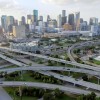
Traffic dropped 66%, but it came back and the coronavirus followed
Traffic levels fell dramatically throughout the Houston metro area as people were ordered to stay at home and businesses were closed to mitigate the spread of COVID-19 — and it worked. But, as the economy was reopened and people returned to work, restaurants, bars, beaches and more, traffic levels and infection rates increased.

Imbalance, inequality and the growing burden on working parents with school-age kids
While children attend K-12 public schools for an average of 1,195 hours per year, a full-time working parent averages twice as much time, about 2,450 hours per year, working and commuting. Now, as school districts prepare to reopen for the fall semester — whether in-person, virtually or a combination of both — administrators, teachers, parents and students are having to adjust their plans based what’s possible during the coronavirus pandemic.

As COVID-19 ebbs and flows, will there be a sea change in cities? It depends on whom you ask.
Surges, hot spots, reopenings and reclosings. As the pandemic’s jagged sawtooth trend line continues to cut across the nation, uncertainty remains. In the end, how much will the composition of urban and suburban areas change?

COVID-19 survey: Houston area is the hardest hit large metro in America
Jobless claims, along with COVID-19 cases, deaths and hospitalizations, are on the rise in Texas. And the social and economic impacts seem to be the greatest in the Houston metropolitan area.

Why are Houston pedestrians forced to play a real-life game of ‘Frogger’?
Under Texas law, drivers are required to yield the right of way to people in a crosswalk, marked or unmarked. But for the most part, Houston drivers ignore the rules. In the end, the driving laws in the state are not protecting vulnerable road users.

Settegast: A case study in endemic racism within Houston’s housing system
In the past month, new and greater focus has been placed on the need to address economic, environmental, educational and health care inequalities related to race in the U.S. For many years, systemic racism has limited access to housing as well. Here, we take a look at findings from the Kinder Institute’s State of Housing report in the context of Settegast, a historically Black neighborhood in northeast Houston.

As COVID-19 cases surge in Texas, July rent is due for many struggling to avoid eviction
Renters in Texas were some of the first in the nation to face evictions after the state’s moratorium blocking eviction proceedings expired last month. A U.S. Census Bureau survey finds that 33% of renter households in Texas have little or no confidence in their ability to pay rent for July.
Rice University
Kraft Hall
6100 Main Street, Suite 305
Houston, TX 77005-1892