Houston has long been hailed as one of the country’s most affordable big cities, bucking national trends. But as the Kinder Institute and others have found, our affordability — and the economic opportunity that comes with it — could be slipping away.
Next week, over 400 volunteers with the Coalition for the Homeless of Houston/Harris County will conduct the annual point-in-time count to determine if homelessness is increasing or decreasing in the area.
In late 2023, the Houston Housing Authority received a $5 million federal grant to help move some of its families to so-called “opportunity neighborhoods,” areas with low poverty, high-quality schools and other amenities.
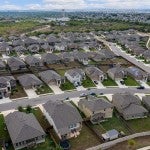
In 2023, Harris County saw a record number of new homes sold — nearly 10,000 — highlighting the region’s growing housing supply amid a broader affordability crisis.
America’s housing shortage and housing costs have emerged as talking points in the race for the White House, with Vice President Kamala Harris addressing these problems in her opening remarks during the presidential debate with Donald Trump in September. Fixing them, however, will require federal, state and local action — and, of course, a lot of money.
Researchers assisted the Houston Housing Authority in data collection and analysis to identify opportunity neighborhoods (areas with high-performing schools, low crime rates, access to jobs, and other characteristics).
Last year, Nura Jemal, her husband and two sons lived in a two-bedroom apartment in southwest Houston. But with a third son on the way, they began to reconsider their living arrangement.
This study, conducted in collaboration with the Houston Housing Authority, explores families' experiences with housing voucher programs, including HHA's new mobility program.
Homelessness is an ongoing challenge for the Greater Houston area, but one it handles better than most of its peers. That may soon change if new sources of funding are not secured by 2025.
Buying a home continues to be a good investment: It has a better rate of return than most other investments, and unlike stocks, a home provides shelter, a fundamental human need. Unfortunately, it is an investment that far exceeds the grasp of many Houston-area residents.
Preliminary data recently released by the U.S. Census Bureau indicated that the Houston metropolitan statistical area led the nation in building permit activity for housing in 2023, with 50,444 single-family homes making up the majority of the 68,755 permits issued for residential units.
According to a report by First Street Foundation, 9% of census blocks in Harris County are listed as “climate abandonment areas,” where people are moving out due at least partially to climate change-related flood risk and not being replaced by incoming homebuyers.