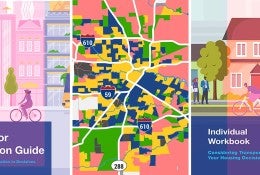
For years, Houston has been touted as one of the nation’s most affordable major metropolitan areas. But it’s now facing a decreasing supply of affordable housing.
To effectively address the affordability crisis in Houston, local decision-makers and individuals must consider the combined costs of housing and transportation and their impact on overall affordability.
To better understand the affordability crisis in Houston, LINK Houston and Rice University’s Kinder Institute for Urban Research teamed up to explore where affordable housing and high-quality, affordable transportation overlap in the city.
Through workshops, community feedback and an interactive data walk, a Houston Community Data Connections team empowered Third Ward community members and other stakeholders to use data from a multi-phase comprehensive needs assessment to pursue priorities in the neighborhood.
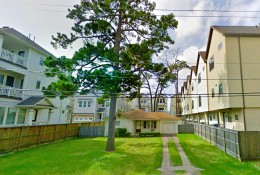
In the past several months, the density of urban areas has been demonized by more than a few because of the COVID-19 crisis. While understandable, it’s not completely accurate when it comes to the current pandemic, which has ravaged New York but hasn’t affected other very dense cities like Hong Kong and Singapore in the same way. In Houston, the city’s light touch when it comes to land-use regulations and its relative affordability are leading to greater density. That trend is likely to continue when the pandemic ends.
Long known as a place where everything except the cost of living is big, the state seems to be losing its edge in the area of home prices — especially in its large metros. Continuing in that direction could lead to trouble down the road.