
How To Test Your Economic Development Strategy
The truth is that when you lure a business to town, more likely than not you’re renting those jobs.

PERSPECTIVES:
How To Test Your Economic Development Strategy
The truth is that when you lure a business to town, more likely than not you’re renting those jobs.
With New Opportunity Zones, A Tool For Change Brings Questions
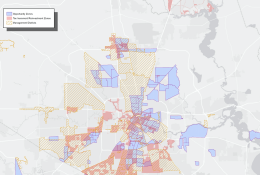
With the designation of 628 Opportunity Zones across Texas, what might this mean for revitalization in the Houston area?
Sustainable Cities Need More Than Parks, Cafes and a Riverwalk
The Conversation | Green cities and green gentrification are two different things.

Reports: Harvey's Impact on Small Businesses, Individual Finances
Three new reports look at spending patterns in the wake of Hurricane Harvey as well as impacts on small businesses.

Changes Bigger Than Self-Driving Cars Headed to a City Near You
Governing | Online shopping and the automation of jobs are going to transform cities.

Rice University
Kraft Hall
6100 Main Street, Suite 305
Houston, TX 77005-1892