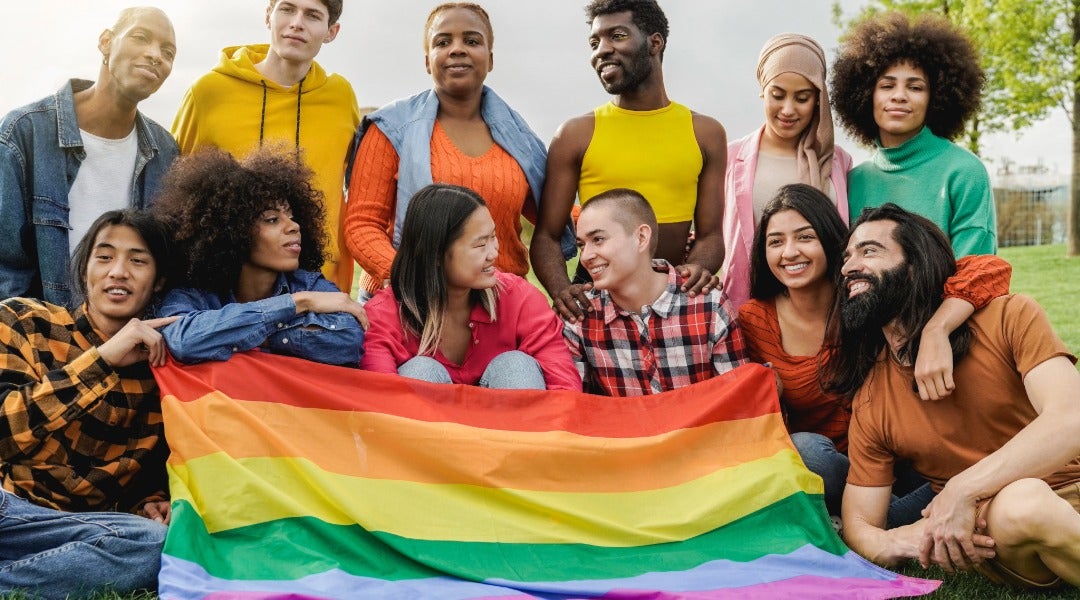
LGBTQ+ residents of Greater Houston experience notable differences in their outlook on belonging, healthcare access and experiences in the workplace that shape their lives in the region, a first-of-its-kind Kinder Institute for Urban Research survey has found.
The survey, taken by about 1,200 local LGBTQ+ residents in the first half of 2026, found distinct perspectives across multiple aspects of life in Houston. Transgender respondents, in particular, reported more challenges with negative experiences.
The Kinder Institute’s Houston Population Research Center developed the Houston Area L.O.V.E. Survey in partnership with the Greater Houston LGBTQ+ Chamber of Commerce and the Montrose Center. The survey aimed to fill a long-standing gap in local data about the day-to-day experiences of the region’s LGBTQ+ residents. Estimates of the population’s size range from about 169,000, according to the Williams Institute, to over 560,000, based on a Human Rights Campaign analysis, meaning Houston has one of the largest LGBTQ+ populations of any metro area in the nation.
The survey relied on voluntary participation. Respondents completed a brief screener confirming their age, Houston-area residency and LGBTQ+ identity before taking the survey. Eligible participants were then invited to complete a longer, 20- to 30-minute survey covering a range of topics, including their economic circumstances, healthcare needs and access, and sense of belonging and inclusion in the area.
About 1,200 people took at least part of the survey and were included in the final report’s findings.
Dan Potter, director of surveys for the Kinder Institute's Houston Population Research Center and lead researcher on the report, said the findings reflect the breadth of Houston’s LGBTQ+ population.
“When we're talking about LGBTQ+ individuals, we are talking about people who are everywhere,” Potter said. “They belong to all groups. Whether we want to talk about race, ethnicity, social class, age, immigration — you pick it — LGBTQ+ cuts across all of it.
“What we've learned from this pilot data gives us a good foundation to continue to build off of. But it also reiterates the need and importance for continuing to get more information, to hear from more voices.”
Because identity groups overlapped and varied by demographics such as age, disparities between groups may reflect factors beyond sexual orientation or gender identity. The analysis did not statistically adjust for these variables.
Four key findings emerged from the survey.
Most respondents feel at home in Houston, found acceptance in school
Survey participants reported varying levels of acceptance and discriminatory experiences as adults and children.
Most respondents were generally positive about life in their current neighborhood, though feelings of belonging differed by group. About 70% of gay respondents said they “somewhat agree” or “strongly agree” that they feel like they belong in their neighborhood, with lower rates reported by lesbian (63%), bisexual (52%) and transgender (41%) respondents.
A slightly smaller share of respondents — about 57% — somewhat or strongly agreed that their neighbors were accepting of LGBTQ+ people. The rates ranged from 69% of gay respondents to 40% of transgender respondents.
When looking back on their middle and high school years, a similar share of respondents said they sometimes, often or very often felt like they belonged on campus. However, two-thirds said they often or very often heard anti-LGBTQ+ remarks, with just 3% reporting never hearing such comments.
Mental health outlook lower than regional average
Nearly half of survey respondents rated their physical health as very good or excellent, a virtually identical rate to members of the Greater Houston Community Panel, or GHCP, who participated in a May-June survey. The GHCP is a group of scientifically selected adults across Harris, Fort Bend and Montgomery counties who participate in regular surveys administered by the Kinder Institute.
However, mental health ratings were lower for LGBTQ+ respondents compared to the total population.
About 35% of L.O.V.E. Survey respondents rated their mental health as very good or excellent, compared with 55% of those in the GHCP survey. At the other end of the scale, 30% of L.O.V.E. Survey participants rated their mental health as poor or fair, compared with 18% of GHCP respondents.
Mental health perspectives also varied by group. About 51% of gay respondents described their mental health as very good or excellent, compared to a lower percentage of bisexual (19%) and transgender (13%) respondents.
“This really does help us understand that the LGBTQ+ community is diverse, that we have diverse experiences, and that while we have made a lot of progress for certain parts of our community, particularly our gay and lesbian communities, that some parts of our communities are continuing to lag behind,” said Avery Belyeu, CEO of the Montrose Center.
Access to needed healthcare differed by service and group
While most respondents could get needed medical care, a large number of participants reported challenges with access that grew as the necessary services became more specialized.
About 77% of respondents who needed primary care services in the previous year said they could always get them, a rate that fell for specialty care (67%), mental healthcare (63%) and gender-affirming care (47%).
Transgender respondents reported lower levels of access to several services, including primary care (61%), specialty care (43%) and mental healthcare (51%). Transgender participants said they could always get gender-affirming care at roughly the same rates as other LGBTQ+ respondents.
Among respondents who had been unable to get needed care, 56% cited cost. About one-third could not get an appointment or said insurance would not cover it. Nearly one-quarter could not find a provider supportive of LGBTQ+ people, a share that rose to 44% for transgender respondents.
Belyeu said the findings point to barriers that can persist even after someone finds a provider.
“It's not just that folks are struggling to find an affirming provider. It is that when they are receiving care, a percentage of folks are also reporting they're having negative experiences in that care,” she said.
Job satisfaction strong, but barriers to advancement remain
LGBTQ+ respondents said they were generally happy at work, with 88% describing themselves as at least moderately satisfied with their jobs.
Still, many saw barriers to moving up the career ladder. Nearly 6 in 10 said invisible barriers slowed LGBTQ+ workers’ career progression, while 44% believed LGBTQ+ workers did not have the same promotion opportunities as similarly qualified colleagues. More than half said LGBTQ+ people were not well represented in leadership.
Many respondents also described negative personal experiences in the workplace. One-third said they felt they had to hide their LGBTQ+ identity to be accepted, while a similar share said they felt unsafe or unwelcome at work. About 44% reported hearing hurtful jokes or comments.
Tammi Wallace, co-founder, president and CEO of the Greater Houston LGBTQ+ Chamber of Commerce, said the findings reflected what the organization has heard from LGBTQ+ workers over the past decade.
“While an employee sitting in Houston might feel reasonably safe because maybe their company does support LGBTQ+ inclusion, that doesn't mean within the company they feel complete in terms of bringing their full and authentic selves to the table, which of course is going to impede upward mobility, productivity and creativity," Wallace said.