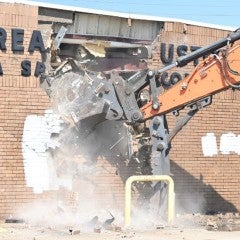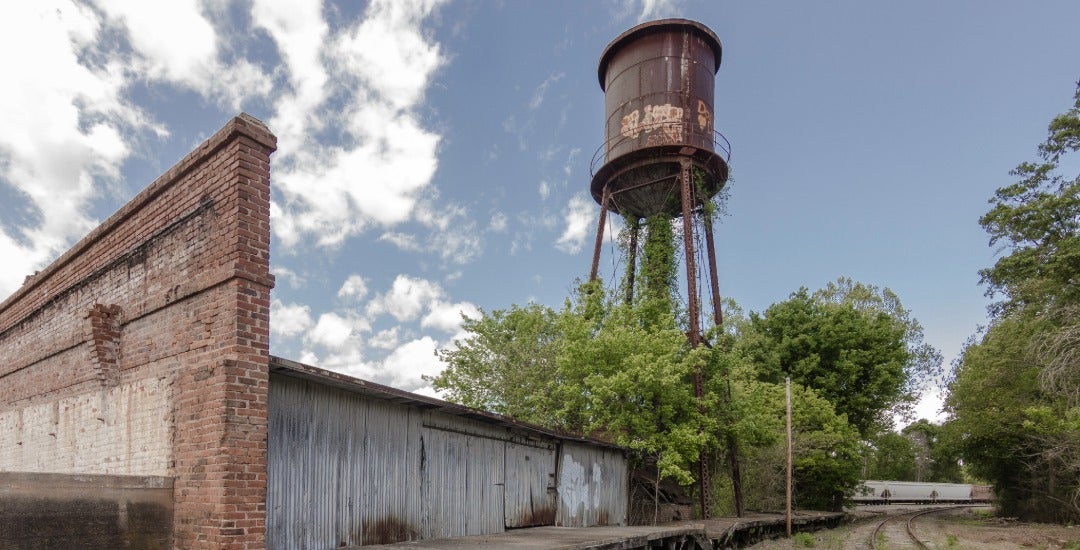
Well before construction started on Daikin Park, the Downtown Aquarium and dozens of other local properties, Houston had some cleaning up to do.
Each site contained decades of environmental contamination, bereft with arsenic, asbestos, lead or other toxins. To help with the remediation, public and private leaders received support through the federal government’s “brownfields” program, opening up funding for the redevelopment of the once-blighted properties.
Now, Houstonians want to keep the brownfield momentum rolling.
The 45th Kinder Houston Area Survey, released last week, shows Houstonians overwhelmingly support the cleanup and redevelopment of brownfield sites across the region, with roughly 4 in 5 respondents calling it an “important” or “very important” priority.
The survey polls a scientifically selected sample of 8,800 adults in Harris, Fort Bend and Montgomery counties, with the results weighted to reflect Houston’s demographics. Respondents took the survey in January or February.
Launched in 1995, the Environmental Protection Agency’s Brownfields and Land Revitalization Program has dedicated nearly $2.5 billion to the assessment, redevelopment and use of properties with suspected contamination across the country.
About $10.5 million has been awarded for over 100 projects in the Greater Houston area, according to local, state and federal databases. The largest concentration of brownfield projects to date is located inside of the Interstate 610 loop east of downtown Houston — areas that have historically served as the city’s industrial base and house many lower- and middle-income Black and Latino residents.
Anna Glanzer DeLisi, a Kinder Institute research analyst and co-author of the report, said support for brownfield revitalization spanned the Houston region.
“Even though we know there are disparities in where brownfields are located and who is affected by them, support for revitalizing and redeveloping these sites was widespread,” DeLisi said. “We saw minimal differences by race or ethnicity, household income, and even whether or not residents lived near a brownfield."
The backing of brownfield projects reflects local fears about the impact of contamination and pollution. About 7 in 10 participants in the 2026 Kinder Houston Area Survey said they’re “moderately,” “very” or “extremely” concerned about the environment’s effect on their health.
‘Clean up and heal the land’
While Houston’s 20th century industrial boom helped turn the region into a thriving metropolis, the economic growth often came at an environmental expense.
Railroad and bus operators, oil companies, trucking outfits, dry cleaners and countless other organizations used hazardous chemicals — some of which have since been banned — to fuel their rise. As those firms closed shop, they often left behind a cocktail of contaminants that posed a public health threat.
To incentivize the redevelopment of those properties, the EPA’s brownfield programs offer a range of benefits: grants for environmental assessments, loans for cleanup costs, technical expertise, tax breaks and more.
Properties are eligible for brownfield grants if revitalization of a site may be complicated by the presence or potential presence of pollutants and other environmental dangers.
Federal grant funds ultimately funnel through states, local municipalities and nonprofits, which work to identify the highest-value potential brownfield sites for target communities and coordinate work on the properties. The city of Houston’s Public Works department and the Houston Land Bank, which is governed by appointees from the city, county and Houston Independent School District, perform much of those duties in the region.
“Private developers typically don't want to touch (these properties) because it takes so long and involves a lot of government compliance and reports,” said Christa Stoneham, president and CEO of the Houston Land Bank. “We are the government, and our public service mission is to invest time to clean up and heal the land.”
Federal officials have awarded funding for sites in Houston ranging from dormant landfills and old hospitals to decaying gas stations and mom-and-pop shops. Incentives to remediate brownfield properties have particularly helped revitalize parts of the city’s Second Ward, Greater Fifth Ward and Sunnyside neighborhoods.
Federal funding, local work
A federal grant for an initial assessment typically totals thousands of dollars, according to EPA data. A deeper investigation of potential contamination often ranges from $10,000 to $100,000.
Funding for environmental cleanup, though relatively rare, can exceed $1 million. The Houston Land Bank received a $5 million grant, one of the largest in the brownfield program’s history, in 2024 for cleanup of a former city incinerator in Second Ward.
Public and private entities then work — sometimes together — to repurpose the properties using their own capital. In Houston, brownfields have been converted into parks, housing complexes, arts centers and a golf course, among other sites.
Congress has gradually increased federal funding for brownfield programs with mostly bipartisan support. A significant spike followed the passage of a major infrastructure bill in 2022, which opened up $1.5 billion in new resources.
Still, the available federal funding for brownfield redevelopment covers only a small fraction of the properties with potential contamination in metro areas like Houston, said Danielle Getsinger, CEO of the environmental consulting firm Adaapta.
“There’s always this debate about whether or not we should be bailing out the chemical companies for creating all of these issues,” said Getsinger, who works closely with Houston Public Works and the Houston Land Bank. “But the reality is that they’ll sit idle and create issues if we don’t.