Who Remains ‘College, Career, and Military Ready’ in the Context of a Shifting Accountability Framework?

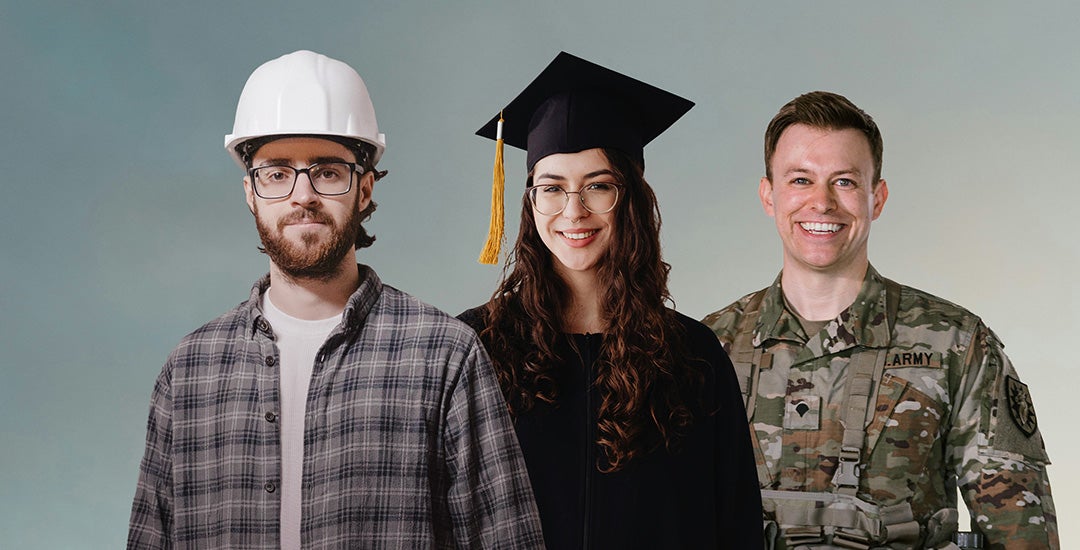
a construction worker, college graduate, and military officer

Low-income students are still being left behind, according to a new assessment of the state’s school accountability system.

This study examines how College, Career, and Military Readiness (CCMR) indicators were integrated into the Texas A–F Accountability System, evaluating the framework's development over time, its equity considerations and its impact across different student groups.

Key findings

Development of accountability system and CCMR framework

  • Legislative mandates and advisory board input shaped the system's design.
  • Periodic disconnect between the Texas Education Agency (TEA) and its advisory committees undermined trust and weakened public stakeholders' role in shaping policy discussions.
  • Complexities in developing a system that worked across different school types hindered clarity, particularly for CCMR.
  • Adjustments had to be made in response to continuous disruptions like evolving CCMR indicators and the COVID-19 pandemic.

Equity considerations

  • The new system aimed to identify metrics that recognized the variety of postsecondary pathways available, creating a broader definition of postsecondary readiness.
  • Despite equity discussions throughout the development process, achieving targeted equity goals was not a primary concern in the finalized policy.

Impact on school districts and students

  • There were significant declines in CCMR rates upon implementation, followed by a slow and uneven recovery as districts adjusted to new standards.
  • Rates are still not at pre-2017 levels, and some demographic groups have seen slower recovery, illustrating the fragility of the accountability system.

Insights on how the accountability system development process could have been better defined and formalized are provided along with recommendations on how to close persistent equity gaps.

This report is part of a series of research on innovative assessment approaches and alternative accountability models coordinated under The K12 Research for Equity Hub. The Hub is managed by EduDream and funded by the Gates Foundation and the Walton Family Foundation.

Suggested citation: Hood, S., Molina, M., Niznik, A., Selsberg, B., Sanchez-Soto, G., & Conlin, D. (2025). Who remains ‘college, career, and military ready’ in the context of a shifting accountability framework? Houston, TX: Houston Education Research Consortium, Kinder Institute for Urban Research, Rice University. DOI: https://doi.org/10.62137/BSBL7148

RELATED URBAN EDGE
Students attend a graduation ceremony
Texas has a robust system for measuring postsecondary readiness. Here’s how it can get even better.
PERSPECTIVES :  Oct. 13, 2025

Kinder Institute research shows the state's "college, career and military readiness" framework could benefit from better collaboration and consistency.

EDUCATION
RELATED URBAN EDGE
Students review coursework during a class session.
Texas’ fastest-growing path to ‘college readiness’ leaves many high schoolers unprepared
INSIGHTS :  Nov. 6, 2025

College prep courses are booming in high schools, but mounting evidence shows they’re not equipping students for success.

EDUCATION
RELATED INITIATIVES
Postsecondary Readiness

Postsecondary readiness broadly refers to how well students are prepared for education, employment or other pathways after high school.

EDUCATION
Body
Body
Body
Mailing Address

6100 Main St. MS-208
Houston, TX 77005-1892

kinder@rice.edu
713-348-4132 

Subscribe to our e-newsletter

Physical Address

Rice University
Kraft Hall
6100 Main Street, Suite 305
Houston, TX 77005-1892

Featured Sponsor

Support the Kinder Institute