A much-anticipated federal housing bill enacted by Congress could make it easier for some Houstonians to buy homes and remove a handful of barriers to new construction, but the sweeping legislation is unlikely to dramatically change the region's housing market anytime soon, Kinder Institute researchers and housing advocates say.
The law, known as the 21st Century ROAD to Housing Act, likely will make manufactured homes cheaper to build, expand access to small-dollar mortgages and modestly reduce competition for single-family homes from large corporate investors — all of which could benefit Greater Houston residents. But none of those changes are expected to produce a major increase in Houston's housing supply or substantially close the region's affordability gap.
“I wouldn’t posit this as a solution to the current affordability crisis,” said Steve Sherman, associate director of research for the Kinder Institute’s Center for Housing and Neighborhoods. “I’d posit it as a bunch of mostly common-sense reforms to housing supply and financial regulations.”
Housing affordability has emerged as a growing concern for Houstonians. In a Kinder Institute survey of more than 10,000 local residents earlier this year, about 6 in 10 said they had at least a little difficulty covering their housing costs in the previous year.
Residential real estate also remains expensive for many residents. The region's affordability gap — the difference between the median home sale price and what a median-income household could afford while spending 30% of its income on housing — has exceeded $100,000 in Harris County for four consecutive years.
The federal government, however, has limited influence over the local housing market, which is shaped largely by economic conditions and market forces. The ROAD to Housing Act, which took effect last month, does not provide significant funding for new construction or offer incentives likely to trigger a dramatic increase in building.
Here’s how four key provisions of the law will — and won’t — affect the Houston housing market.
Making manufactured homes cheaper to build
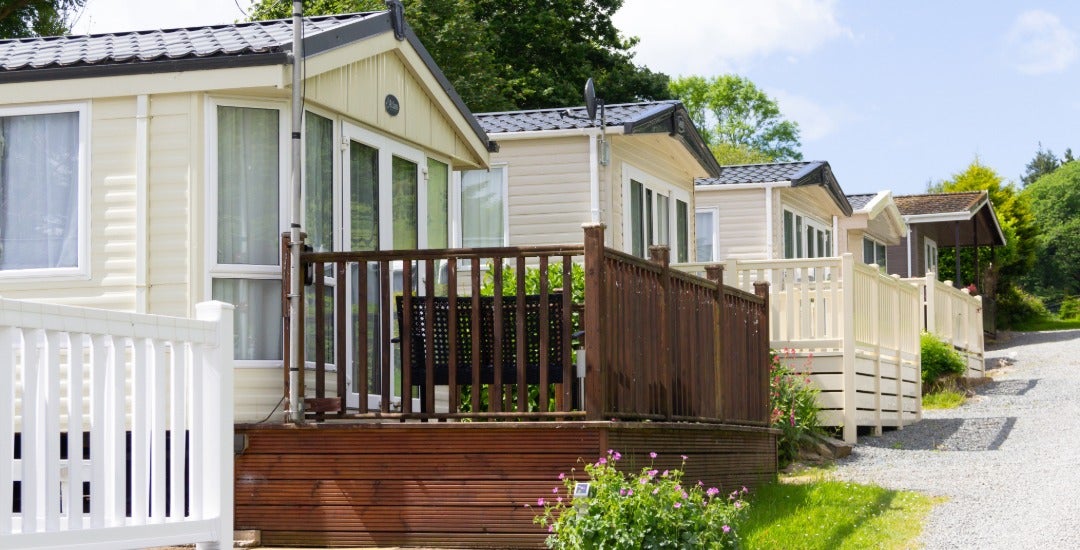
Historically, manufactured homes — often known as mobile homes — legally had to sit on a permanent chassis, a large metal frame that makes the structure easier to move.
But the vast majority of manufactured homes remain on a property for decades, and a chassis adds thousands of dollars to the assembly cost. A chassis also makes it more difficult to build two-story manufactured homes.
The new legislation removes the chassis requirement, a change that will make manufactured homes even more affordable and likely lead to a stronger market for the structures. The average manufactured home has sold for roughly $130,000 in recent months.
“Anybody who's trying to get new housing stock on the ground is going to need the fastest and most cost-effective way to do that,” said Rob Ripperda, vice president of operations for the Texas Manufactured Housing Association. “As far as an affordability play and an entry-level homebuyer product, there's no better game in town.”
Mobile homes and similar types of housing are more common in Greater Houston than many other large metro areas, accounting for 4.5% of all housing units across the region, according to 2024 American Community Survey estimates.
Ripperda said the speed of manufactured home expansion in Greater Houston will partially depend on various local government zoning regulations that dictate where the structures can be placed.
Sherman also cautioned that scaling up supply of manufactured homes might take time. While manufactured homes are often much more standardized than other dwellings, they still require specifications that account for local soil, topography, weather and other factors.
“It’s not like you can just crank them out in one factory and ship them all around the country,” Sherman said. “I think that people who assume there’s going to be some kind of orderly, nationalized production of manufactured homes from a few companies that do the same thing everywhere are living a bit of a fantasy.”
Expanding access to small mortgages
Many banks don’t offer mortgages with small amounts of principal, largely because they’re unprofitable for the lender. That sometimes makes it hard for prospective homebuyers to acquire the most inexpensive properties.
The legislation creates a pilot program that could deliver financial incentives to lenders willing to issue “small-dollar” mortgages — which have a principal of less than $100,000 — and grants to aspiring homebuyers. The law also includes regulatory reforms designed to increase the number of small-dollar mortgages issued.
The updates could make it easier for some first-time and lower-income homebuyers in Houston to secure mortgages, though the regionwide impact likely would be minimal.
Only 1,700 homes in the Houston metro area sold for less than $100,000 in the first half of 2026, equal to 1.4% of all sales, according to the Houston Association of Realtors. Another 700-plus homes listed for sale were priced below $100,000 as of late July.
“It likely will benefit people in very rural areas or dilapidated census tracts,” said Michael Wilt, senior manager of external relations for the Texas State Affordable Housing Corp., a nonprofit that works to expand affordable housing access. “But it also might end up benefiting people who have a whole lot of equity to bring to the closing table and don’t need a big mortgage to buy their house.”
Restricting institutional homebuyers
Large corporations buying up single-family homes has drawn widespread attention in recent years, and the ROAD to Housing Act targets these buyers. The law bans organizations that already own 350 single-family homes from acquiring more properties, with limited exceptions. (It doesn’t preclude new home construction or restrict build-to-rent development by institutional investors.)
In Houston, the provision could reduce competition for single-family homes — but only marginally.
A Kinder Institute analysis of Harris County property records in early 2026 identified six companies that owned 350-plus single-family homes. The companies combined to hold about 10,400 properties, or roughly 1% of all single-family homes in the county.
Addressing heirs’ property issues
Houston-area housing advocates are increasingly warning about the consequences of heirs’ properties, homes that have been passed down through generations but lack formal documentation of ownership.
Without clear ownership, families often struggle to access grants and financing to make needed home repairs, and selling the home can become challenging. There’s no available data on the number of heirs’ properties in Houston, though local leaders say the issue particularly affects Black and lower- to middle-income households in the region.
Under the ROAD to Housing Act, the U.S. Government Accountability Office must study issues related to heirs’ properties and propose solutions, such as financial assistance to organizations that help clarify ownership of homes. However, Congress still must dedicate funding to those solutions, and it’s unclear when any funding would reach Greater Houston.
Staff writer John Brannen contributed to this report.