
By Kathryn Gonzalez
Gonzalez is the research coordinator for the Kinder Institute's Center for Community and Public Health
Grief is a universal part of life. We may grieve when someone dies, but also when an important relationship ends, our health changes, we move away from a familiar home or community, or another meaningful part of our lives changes. Having opportunities to understand a loss, express what we are feeling and find support can help us cope with these changes.
For adults with intellectual and developmental disabilities, or IDD, those opportunities are not always readily available. Information about grief, the emotions that can follow a loss and ways to cope may not be easy to understand. Additionally, people with IDD may not be included in conversations about changes affecting their lives, and many existing resources were not created with their communication and support needs in mind.
Over the past three years, our team at the Kinder Institute’s Center for Community and Public Health has been working to address this gap in evidence-based resources alongside adults with IDD, families, service providers and community organizations across Greater Houston. The project, called Paths, helps adults with IDD understand, communicate about and respond to grief and loss.
As part of the project, we developed a six-part video series and accompanying booklets that combine accessible information about grief and coping with personal stories, visuals and practical activities. The resources are available online at PathsForHealing.org in English and Spanish, with plans to add more languages in the coming years.
Together, the resources explore what grief is and how it can feel, ways to care for yourself, ways to remember people or things you have lost, how to ask for support and how to find hope during difficult times.
Accessible grief support begins with recognizing that people with IDD have their own unique experiences of loss, ways of expressing grief and perspectives on the support they need. Those perspectives informed how we developed Paths — and they should continue to inform how grief, health and well-being support is designed and delivered for people with IDD.
A research need
Despite the universality of loss, grief among adults with IDD remains an understudied area of research.
In 2025, we conducted a systematic review of 28 peer-reviewed studies on bereavement among adults with IDD. While the existing research had methodological limitations and left gaps in our understanding of these experiences, the literature identified recurring issues related to understanding and communicating about death and loss, coping with grief and accessing support.
Studies documented the exclusion of adults with IDD from mourning rituals and conversations about death. They also pointed to social support, open communication and opportunities to express grief as helpful in coping with bereavement.
The death of someone close can also bring other significant changes for people with IDD: new responsibilities, different types of support, even relocation. Our review found that the compounded stress of secondary losses can exacerbate bereavement symptoms, yet these additional changes are not always adequately recognized or addressed.
These gaps raise an important question: What does meaningful and accessible support actually look like for people with IDD? Making information available is not enough if it is difficult to understand, does not reflect the ways people communicate and process information or is developed without input from the people expected to use it.
For Paths, this meant approaching accessibility and community engagement as core components of the development process.
The Paths project
The Center for Community and Public Health interviewed 25 adults with IDD and 25 caregivers and service providers to learn about grief, loss and support within the IDD community. Community partners helped design the study and continued to provide input throughout resource development, including on content, language and presentation.
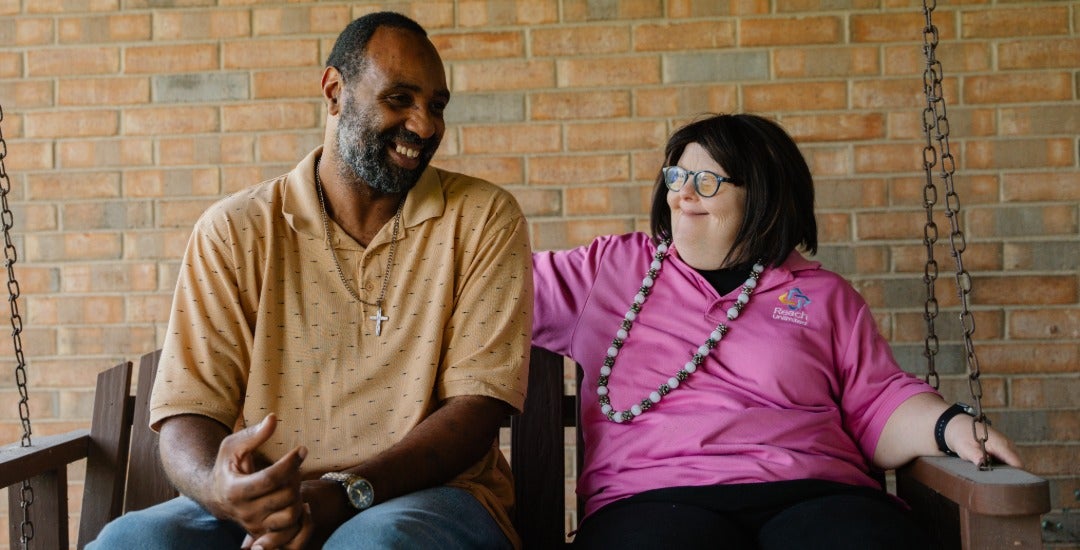
Adults with IDD share their own stories of loss on camera, connecting information about grief to real-life examples and challenging misconceptions that people with IDD do not understand or experience grief. They also model talking openly about loss, using strategies to cope, seeking support and finding hope. In doing so, participants contribute their own knowledge rather than appearing only as recipients of support.
The six-part Paths video series breaks information about grief into focused topics that can be viewed together or individually. Across the series, clear language, captions, visual elements and examples help explain concepts that can otherwise be difficult to understand. The videos move from explaining what grief is and how it can affect us to practical strategies for caring for yourself, remembering what has been lost, asking for help and finding hope.
Because communication and information-processing needs vary, Paths offers multiple ways to learn about, reflect on and talk about grief. The Paths booklets include Easy Read and Plain Language versions, with photographs and reflective questions that help readers connect the information to their own experience. The booklets can be used alongside the videos or independently.
Ultimately, accessibility is about more than whether information can be understood. It is also about whether people can see their experiences reflected, connect what they are learning to their own lives and use that information when they need it.
A path forward
The next challenge is helping these resources reach adults with IDD. Expanding their reach can create more opportunities for conversations about loss and make it easier for people to find support when they need it. Families, caregivers and service providers can contribute by using the Paths resources to create space for conversations about grief, recognize individual needs and identify ways to respond.
Alongside efforts to expand access to existing resources, there is still much to learn. More rigorous studies are needed to understand how experiences and support needs may differ by person, types of loss and circumstances. Future research should directly include adults with IDD and account for their different support needs.
Community organizations, service providers, health professionals, researchers and funders can contribute by sharing accessible resources with the people they serve, creating opportunities to discuss grief and loss, partnering with adults with IDD in research and program development and investing in accessible mental health information and support.
Loss and grief are part of life, and people with IDD should not have fewer opportunities to understand and cope with grief when it occurs. Grief is universal. Access to meaningful support should be, too.
This work was initially supported in part by the Texas Council for Developmental Disabilities (TCDD) through a grant from the U.S. Administration for Community Living (ACL), Department of Health and Human Services (HHS), Washington, D.C. 20201, with a 100% federal funding award totaling $6,120,128. The contents do not necessarily represent official views or endorsements from TCDD, ACL, HHS, the Texas state government, or the U.S. government.
Additional Paths community partners include Alexander Jewish Family Services Celebration Company, Bo’s Place, Bridges to Possibilities, Easter Seals Greater Houston, Harris County Commissioner Precinct 4, Houston Mayor’s Office for People with Disabilities, Noah’s House, Pursuit Center, Reach Unlimited, The Brookwood Community, The Harris Center for Mental Health and IDD, University of Northern Colorado College of Osteopathic Medicine and UTHealth Houston.
![Paths [Senderos]](/sites/g/files/bxs4896/files/styles/thumbnail_medium_240x240/public/2025-07/Paths%20%5BSenderos%5D.jpg.jpeg?itok=RWBmeUYs)